Table of Contents
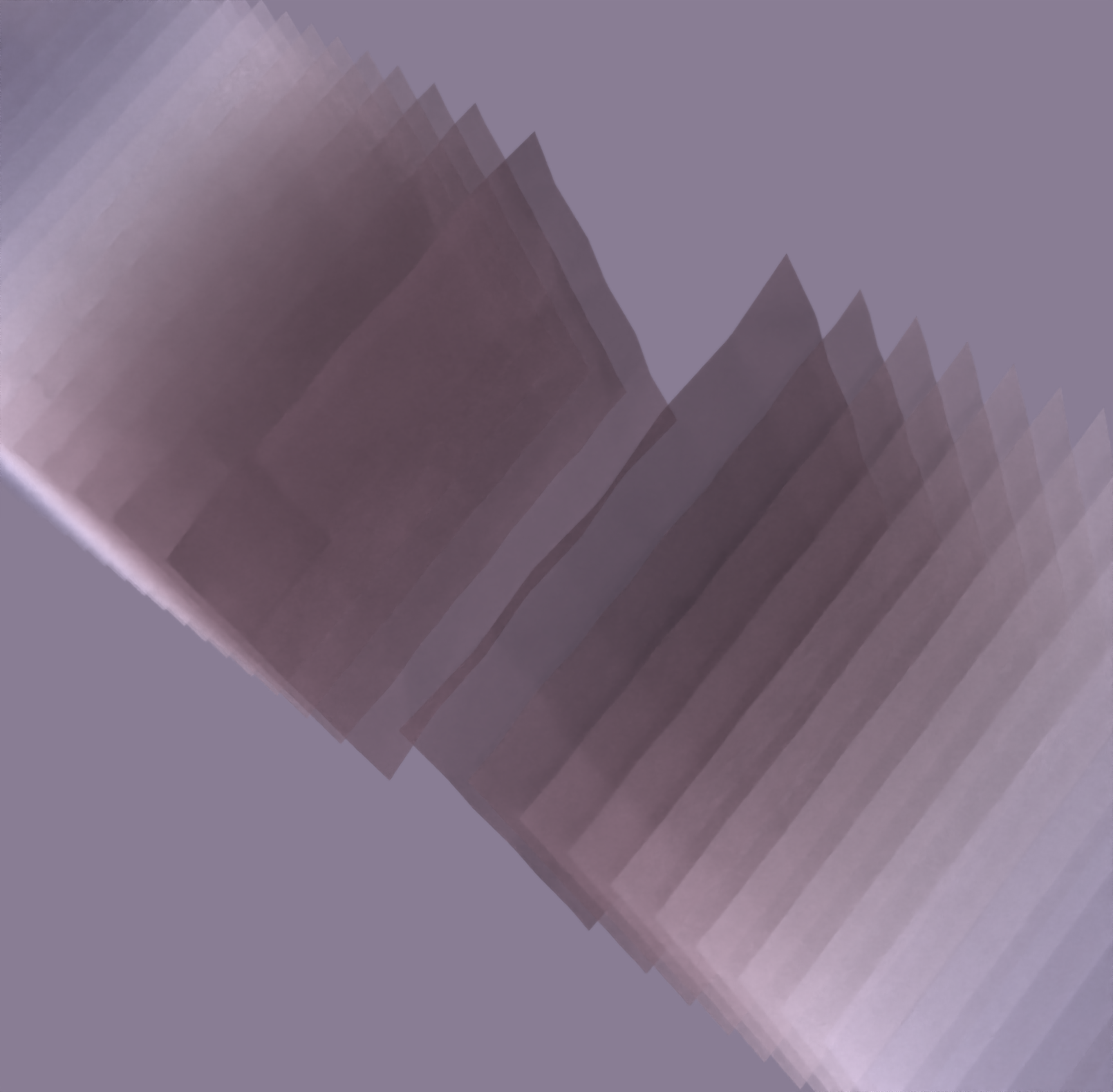
Figure 1: Output of FEniCSx solver captured using raymarching in ParaView.
Github link: https://github.com/mtrpdx/aurora
NOTICE: This article is a work-in-progress as I experiment with Org mode > LaTeX > HTML output.
Introduction
This year I developed a habit of browsing the DARPA solicitations from time to time. I came across a solicitation for a study on the feasibility of ``Acoustic-based UAS Rainbow Oscillation Refraction Architecture,“ and this intrigued me. There was a link to a 2025 Science article [1] that describes a method of designing homogeneous 3D structures for desired acoustic properties through the power of applied topological optimization techniques. Christiansen et al. show that they were able to use these designed structures to separate wide-bandwidth noise into spatially-separated frequency bands at above-unity efficiency. The DARPA solicitation called for studies into the feasibility of this technique applied to drone noise, to design structures or materials that could help drones communicate information like position or velocity with each other passively through the spatial separation and direction of their broadband propeller noise. Upon an initial glance, this problem appeared to me possible to explore, at least in simulation.
Methodology
Before extending the application of acoustic morphogenesis to the domain of drone communication, a necessary step is to reproduce the results in [1]. The supplemental materials provide a .png image of the bitmap acoustic rainbow emitter (ARE) structure (Figure fig:AREdesign). This design resulted from iterative 2D topological optimization, with distance from the desired acoustic properties used as a loss function [1]. This optimal 2D design is optimal in the sense that it optimally minimizes the loss function. It is not the only possible structure; there are infinitely many solutions which can then be extruded and used for 3D simulation, additive manufacturing (3D printing), and physical measurement in an anechoic environment. Some solution structures may be easier to manufacture or test than other structures, so it is possible that incorporating this aspect into the loss function in the form of a term that encourages simpler structures may prove to be beneficial. The main simulation tool that [1] uses is a finite element solver and analysis suite called COMSOL Multiphysics. Seeking open source alternatives, I open a browser window and search for finite element analysis software [2], [3], [4].
Unfortunately, what might have been a straightforward simulation in COMSOL becomes an increasingly deep rabbit hole. A flash of consciousness. I look at the clock, it is three AM and I have one hundred and seventy-one tabs open. I emerge from a stupor a three months later, with a set of tools under my belt and a vague sense of how they fit together, but why have I chosen these tools exactly? Or have they chosen me? I decide it could be worthwhile to document the exploration of the different options available to me [5], [6], [7], [8], [9], [10].
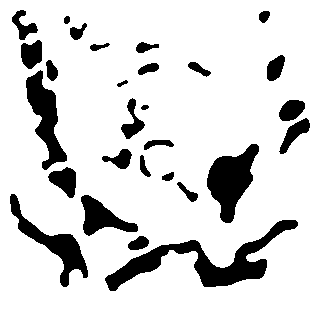
Figure 2: ARE design bitmap
To fully reproduce the results in [1], I have to solve both the 2D optimization and the acoustic finite element simulation problems, so this is easily broken down into two tasks, with multiple ways to accomplish each:
- 2D optimization
- 3D acoustic finite element simulation
I decide to tackle the second task first, since I will use the simulation to verify the results of the optimization task.
Finite Element Analysis Roadmap